
Introduction
Ever asked yourself why one production line sings while the next grinds to a halt? If you’re an electric motor supplier, you’ve likely tasted that frustration—downtime, torque spikes, and customers on the phone at dawn. I’ll set the scene: a medium-sized workshop I visited last year lost roughly 12% uptime due to mismatched drives and overheating power converters (small shop, big headaches). The data’s simple enough—more than half of service calls trace back to poor spec matching—so what choices actually move the needle for suppliers and their clients?
I want to be clear and practical here; I’m not selling a myth. I’ve watched a single specification change (say, swapping a generic variable frequency drive for a matched VFD-inverter set) cut vibration and extend bearing life. That said, decisions are rarely binary. They hinge on lead times, spare-parts policy and whether the customer has a maintenance plan. Mind you, I’ll admit this isn’t glamorous—yet it’s where margins and reputations are made. Let’s look at where the fault lines really lie — and what to do next.
Deeper Problems: Where Traditional Solutions Fail
electric motor & supply often leans on tried-and-true fixes—standard replacements, off-the-shelf drives, quick rewinds. Those stop-gaps work occasionally, but they hide failure modes: improper motor sizing, neglected power converter cooling, and a love affair with the cheapest VFD settings. Technically speaking, a mismatch between drive tuning and motor characteristics increases torque ripple and bearing stress. I’ve seen BLDC and induction motors suffer the same fate when installers treat the motor like a black box. Look, it’s simpler than you think: tune the drive to the motor’s torque curve, and the machine runs quieter and longer.
What goes wrong?
First, the supply chain shortsightedness—suppliers push fast delivery, operators accept generic parts, and systems get mis-matched. Second, diagnostic blind spots—no one measures harmonics or temp rise until a gearbox fails. Third, maintenance misconceptions—rewinding a motor without reviewing stator insulation class or inverter compatibility is false economy. I’m speaking from hands-on work; these are not abstract issues. We fix them by insisting on proper spec sheets, verifying thermal profiles, and validating inverter-motor pairs. That’s where reliable uptime starts — and where many providers fall short, frankly.

Forward-Looking Principles for Suppliers
What’s Next?
Looking ahead, I favour pragmatic advances rather than buzzword-heavy promises. For instance, electric motors supplier partnerships that incorporate on-site diagnostics and standardized spare kits reduce mean time to repair dramatically. I’ve worked with teams who integrated edge computing nodes into drive cabinets to stream vibration and temperature data; this gave them a week’s warning before failures—funny how that works, right? The principle is simple: combine smarter drives (better inverters and matched VFD tuning) with data-fed maintenance to stop surprises.
New materials and control algorithms are useful too—brushless DC (BLDC) designs with improved cooling, smarter power converters, and adaptive torque control reduce energy loss and lower lifecycle cost. I expect a shift from reactive replacement to modular upgrades: swap the drive, keep the motor, or vice versa, depending on life-cycle math. From my point of view, suppliers who learn to compare total cost and not just purchase price win more repeat business—and fewer awkward late-night calls.
Closing: How to Evaluate Suppliers
I’ll finish with three concrete metrics I use when choosing or assessing an electric motor partner. First: system efficiency under load—not just nameplate efficiency but measured, real-world watts per task. Second: total lifecycle cost—factor in expected maintenance, spare parts, and mean time between failures. Third: diagnostic and support readiness—does the supplier offer firmware updates, remote commissioning, and spare-module availability? These are the things that separate talk from results.
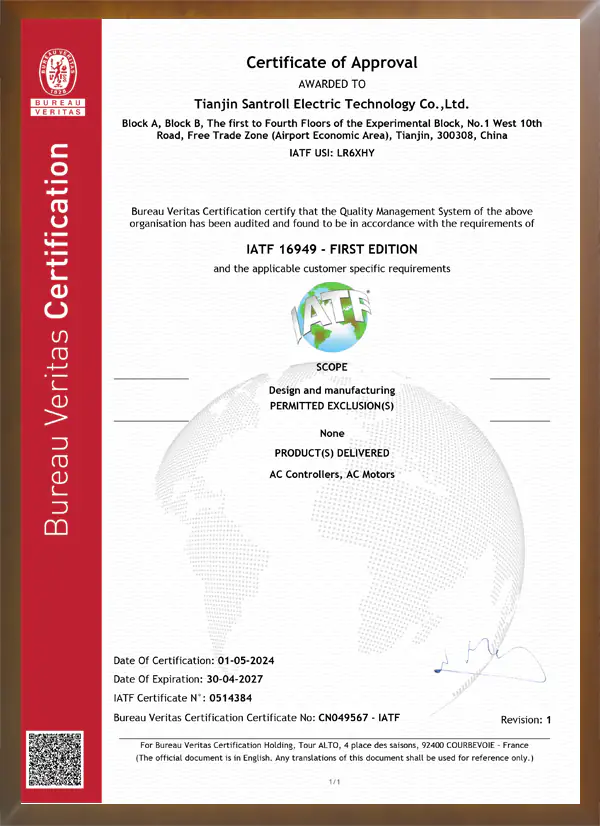
In short, we should demand smarter specs, insist on matched drives, and plan for diagnostics up front—small changes that lead to measurable uptime and customer trust. — I’ve seen it work, and I still feel a bit pleased when a site that once groaned now hums quietly under steady load. For practical partnership and supplier options, consider checking Santroll for a starting point: Santroll.